Overview
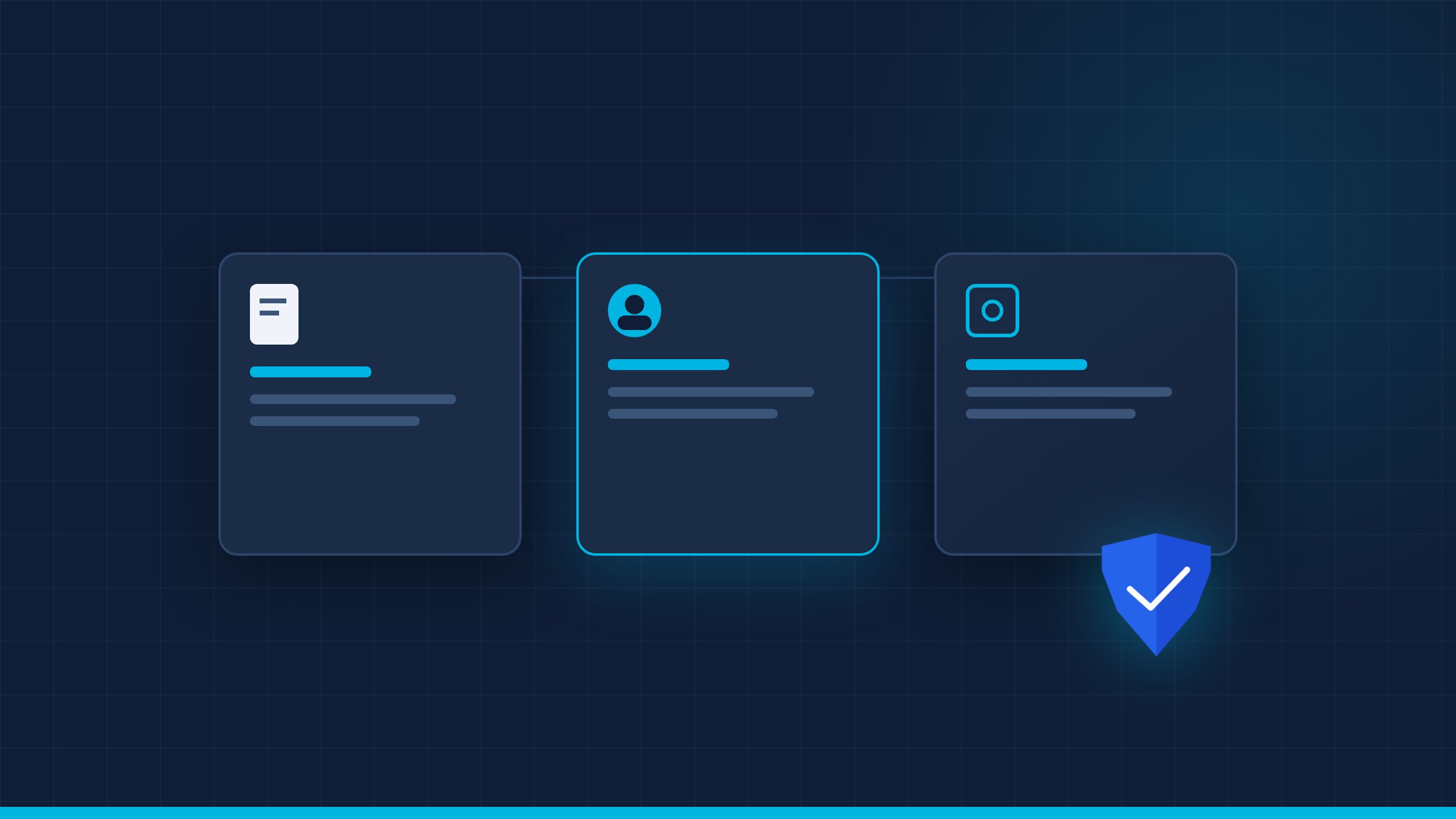
DRM protects a file, IRM protects access to content, and EDRM protects the document as a managed record. They overlap in the demo and diverge in production.
Three models, three different promises
The file is the starting point for DRM: persistent encryption and a license. IRM starts with the user: policy, identity, and allowed actions. EDRM starts with the record: lifecycle, custody, and audit.
Vendors use the terms interchangeably; procurement suffers. The label is not the control; the control point is. The confusion is expensive: teams buy one model and expect another. Procurement should force the vocabulary.
Ask what must survive: the file, the session, or the record. The answer decides the model. A record can be protected by all three and still fail the question that matters.
- DRM — controls the file and its license.
- IRM — controls what an identity may do with content.
- EDRM — controls the record, its custody, and its lifecycle.
What each one controls
DRM encrypts the file and checks a license at open time. It can work offline, but the key often lives near the endpoint; revocation is the hard part. Key custody, offline grace periods, and license servers decide whether revocation is real.
IRM evaluates identity and policy at access time, logs the action, and can revoke the next request. It needs a reliable identity and a session to enforce. The policy decision is only as good as the identity behind it. Logging is not evidence unless it can be exported.
EDRM manages the record: classification, retention, legal hold, audit, and disposition. It is strongest when the document must remain a managed object, not just a protected file. Retention and legal hold are not features you bolt on after the viewer. A record without a schedule is a file with a long life.
Where each one fits
The overlaps are real. An EDRM viewer can render pages and revoke access; an IRM product can enforce document policies; a DRM platform can log opens. The difference is where the control lives. The same document can be all three at different stages of its life. The control point moves as the document moves.
Failure follows the gap. DRM fails at screenshots and exported keys; IRM fails with shared accounts and disconnected sessions; EDRM fails when it becomes an archive without enforcement. A screenshot defeats a file control; a shared account defeats an identity control; a missing schedule defeats a record control.
A policy without a log is a hope; a log without a policy is noise. The model must cover both the decision and the evidence. The report has to say which model produced the evidence. Make the report readable.
- DRM — media, software, files that travel.
- IRM — documents read by external identities.
- EDRM — regulated records with retention and hold.
- Hybrid — record lifecycle plus session control.
Decision matrix
Start with the asset and the recipient. Media files and software licenses are DRM problems. Contracts read by bidders are IRM or EDRM viewer problems. Board packs, clinical records, and CUI are EDRM problems. Write the asset, recipient, action, and evidence in one line before the demo. A matrix that cannot be explained to counsel is not a matrix.
Then ask what must be proven: who opened the file, which pages they saw, or what happened to the record over years. Each question points to a different control point. If the answer is all of the above, the workflow is not defined yet. Write the answer down.
Test revocation, screenshot behavior, export, and retention. A model that cannot answer the test is a label. Ask the vendor to show the failure, not only the happy path.
- Asset — file, content, or record?
- Recipient — internal, partner, regulator?
- Evidence — open, page, action, lifecycle?
- Constraint — offline, air-gapped, retention?
Checklist before you buy
Name the asset, the recipient, the action, and the evidence. If the vendor cannot map the model to those four, the label is marketing. The model is a hypothesis; the test is the proof.
- Asset — what exactly is protected?
- Action — view, copy, print, forward?
- Revocation — next request or next session?
- Evidence — exportable and readable?
DRM, IRM, and EDRM are not interchangeable; they answer different questions. Choose the model that matches the asset and the evidence you must produce. The NIST SP 800-207 access model is a useful reference for the policy decision. For the explainer, see what EDRM is; for watermarking, see how forensic watermarking works; for the viewer, see what a secure document viewer is; for due diligence, see VDR vs EDRM viewer. If you are choosing a model for a real workflow, request a demo. The wrong model is expensive; the wrong label is worse.